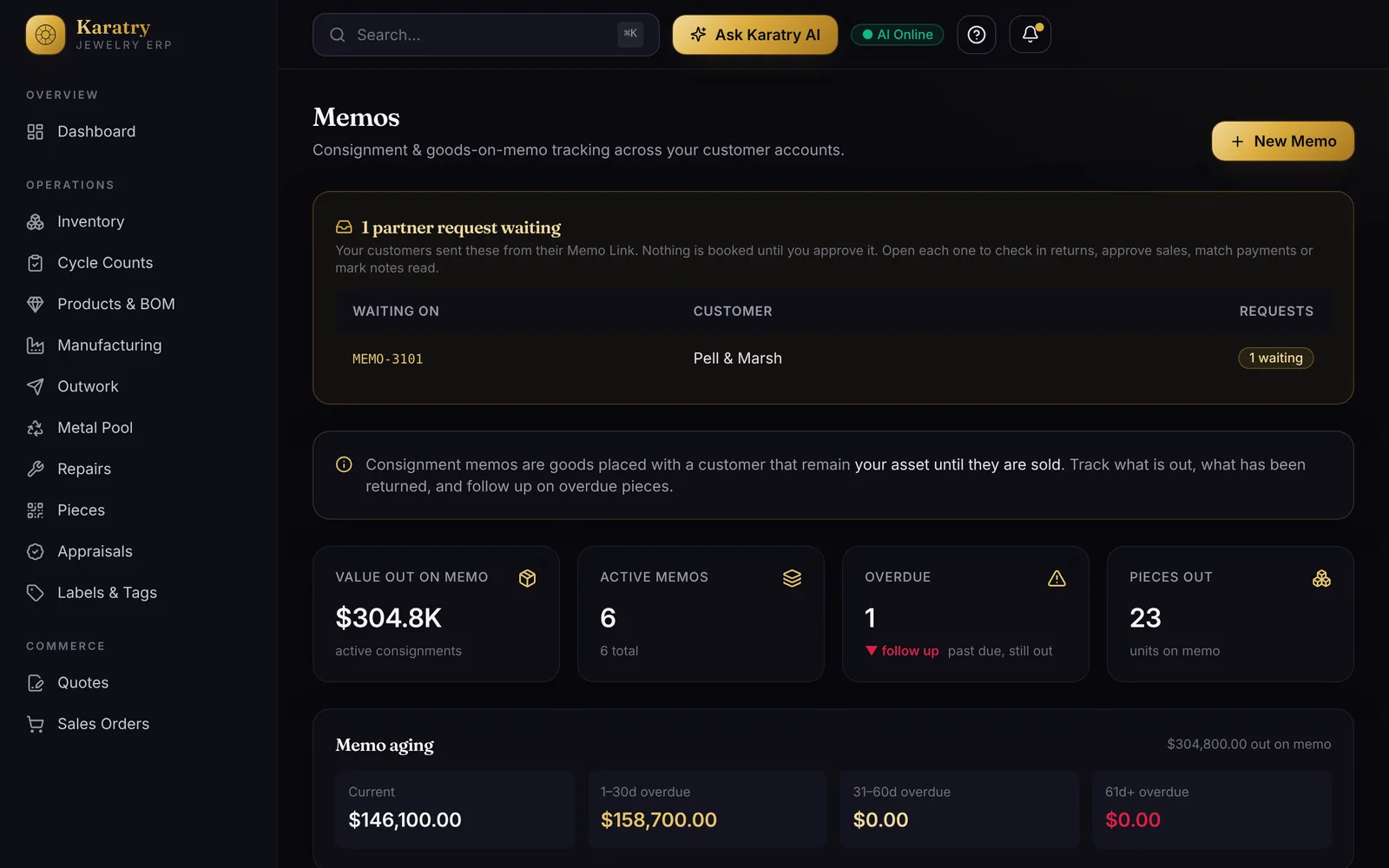
The Memos screen: value out, pieces out, what is overdue, and memo aging. The stores in it are made up.
Tracking jewelry out on memo to stores
Each memo goes to one store and has a due date.
- Write the memo. Add stock by quantity, or pick the exact pieces by piece number. A line can also be a plain description and a value.
- Say how it ships. Record the stated value, the carrier and an insurance note. Print the memo PDF. It carries standard consignment terms, so the goods stay yours until they are sold and paid for.
- Send it. The goods leave your stock as soon as you create the memo.
- Take back what comes back. Return part of a line, or some of the pieces. The rest stays out. Returned pieces go back into stock, to the place they left from.
- Bill what sold. Mark the line or the pieces sold. Karatry makes a sales order for them at the memo price. It ships and is invoiced like any other order.
- Settle the rest. Mark a line lost or damaged. Then bill it to the store or write it off. If the store needs more time, push the due date out.
A store on credit hold can't get a new memo unless a manager or admin overrides the hold. If you delete a memo that has moved stock, Karatry cancels it instead. What was out comes back, and the memo stays on record.
The memo aging report and the Memos screen
The Memos screen shows the value out on memo, the pieces out and what is overdue. Memo aging splits the value into four columns: current, 1–30 days overdue, 31–60 days overdue and 61+ days overdue.
Aging counts calendar days past the due date. A memo due today is still current. Every morning Karatry marks memos past their due date as overdue. Only memos with goods still out get the flag.
The Memo Exposure report lists each store, what it holds and how late, in the same four columns. It downloads as a CSV.
Memo Recall looks at every piece out on memo. It scores the odds that each one sells where it is, from your own memo history, and shows you why. It may suggest “Pull back” or “Send elsewhere”. It only gives advice. It never moves a memo.
At the store, use Audit on phone. Scan or type each piece number. Karatry shows what is expected, present, missing and unexpected, and saves the audit.
Memo Link: the store's side of the memo
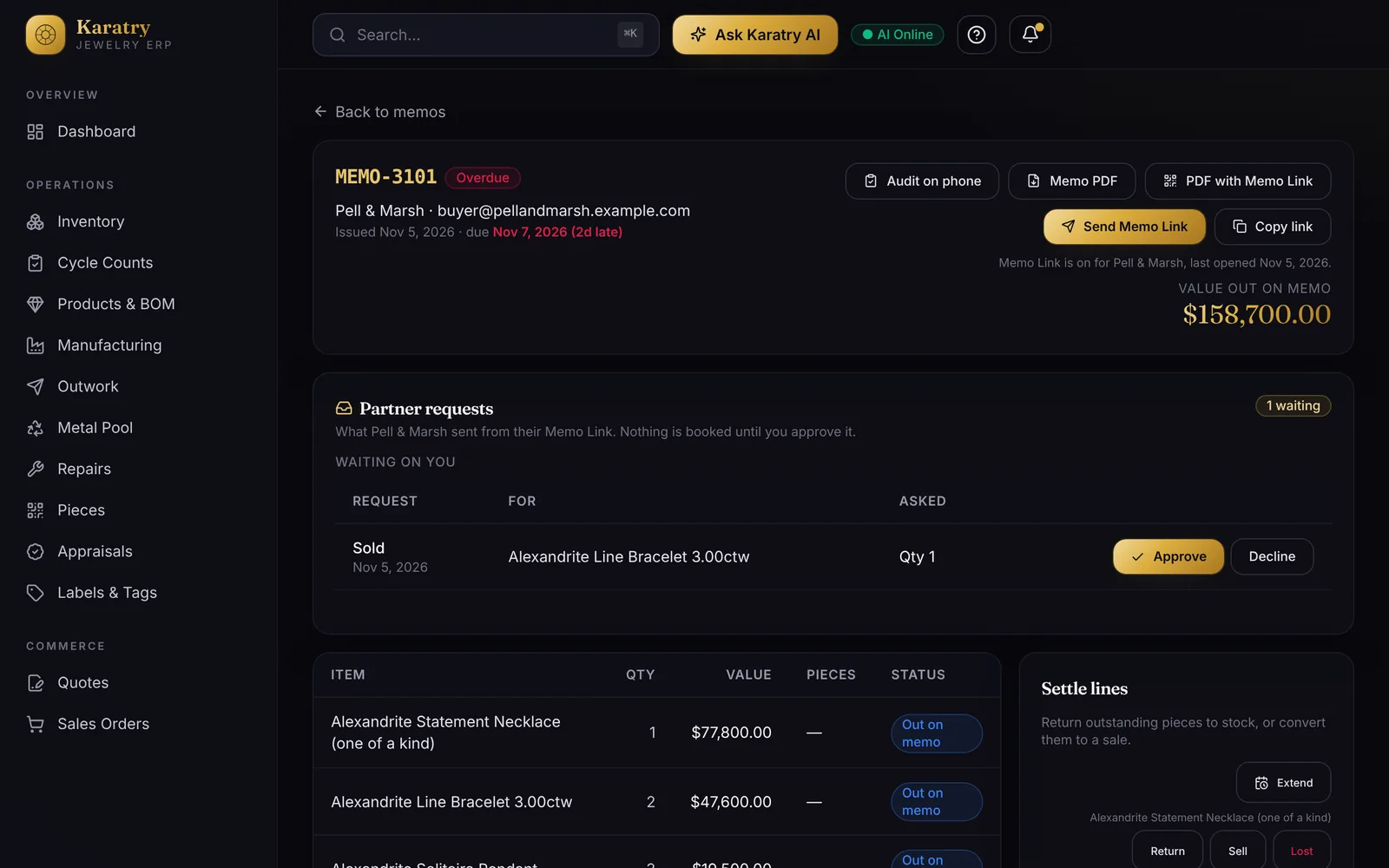
A store reported a sale from its Memo Link. It waits here until you approve it.
Memo Link gives each store a private link to its memos. The store sees its open and settled memos, each piece and what happened to it, and the memo terms. It can accept a memo, report pieces sold, report pieces it is sending back, or send back everything.
Nothing moves until you act. You approve a reported sale. You check in a return when it arrives. If you decline a request, the store sees your reason.
The store can also tell you it paid. That is a notice only, and it moves no money. Memo Link shows the store its open balance and open invoices too.
Memo Link never shows a store your costs, your stock or your other customers. The store does not need a Karatry plan. Press Send Memo Link and Karatry emails the store its link from your shop name. Replies come to your email. The memo PDF can carry the link as a QR code.
Vendor memo in, kept apart from the stock you own
Some goods come to you on memo. Record what a vendor sends you, with a return-by date. A vendor's piece can go into your stock. It scans, sits at a location and can go out on your own memo to a store.
It does not count in your inventory value until you buy it. When it sells, Karatry makes the sale and the vendor bill at the memo price. You can also send it back, or buy it into your own stock. If you push a store's memo past the vendor's return-by date, Karatry asks you first.
What it replaces
Karatry replaces the memo spreadsheet and the paper memo pad. Your stock, memos, orders and invoices are in one system. A piece sold off memo becomes a sales order and then an invoice, and nobody types it twice.
The same system runs your style costing and the bench. See every feature, or compare Karatry with what you use now.
What it costs
Memo and consignment are part of the one plan, Professional. It is $30 a seat a month, or $300 a seat a year. Every seat includes $10 of Karatry AI a month, shared across your workspace. The stores on your memos don't need a seat. Try everything free for 30 days, with no credit card. See pricing.
How to move over
Import your customers, inventory and styles from a CSV in minutes. Then write your open memos in Karatry. Run it next to what you use now through the trial. If you get stuck, a real person answers email support. Your data exports to CSV at any time, and there is no exit fee. See how switching works.